Introduction
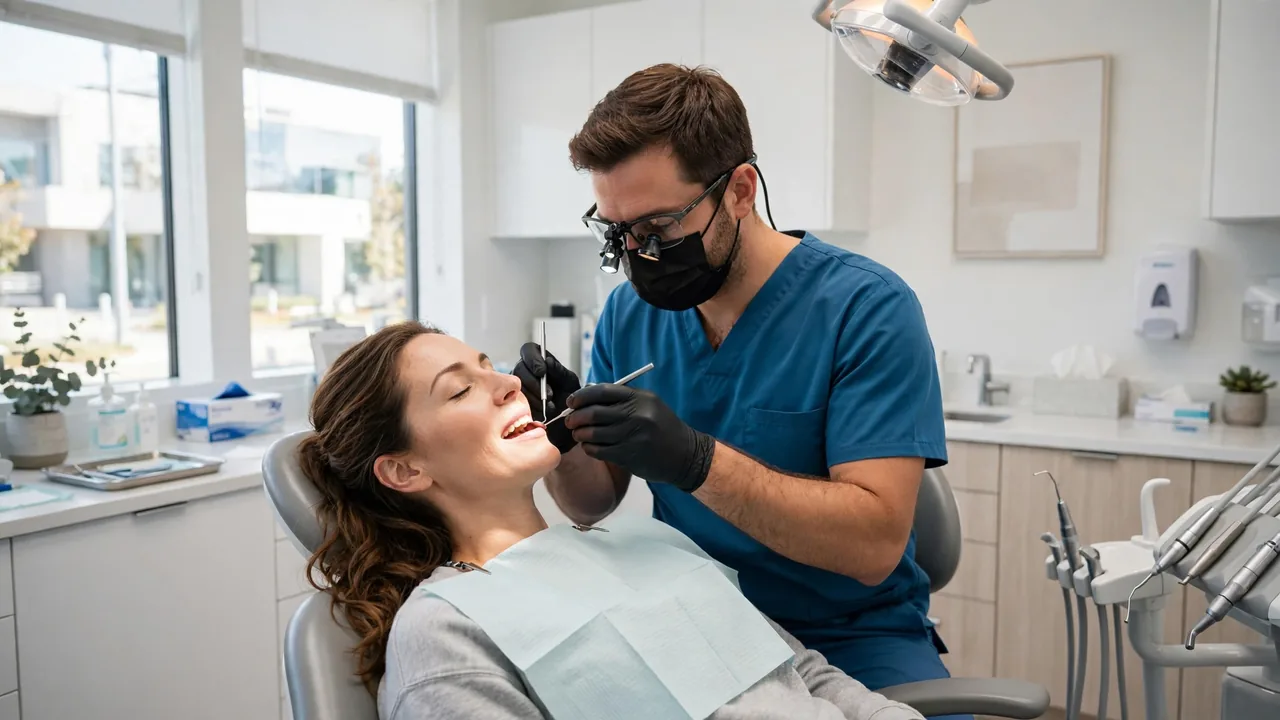
A dull ache when you bite, a zing when cold water hits one tooth, a rough spot your tongue keeps finding. It is natural to wonder if you have a cavity, and just as natural to hope it goes away on its own. Cavities do not heal, but catching one early is the difference between a small filling and a root canal.
This guide shows you how to check your own mouth methodically: the symptoms that genuinely point to decay, the visible signs you can spot with a mirror and good light, the sensations that mean something else entirely, and the point where only a dentist with X-rays can give you a real answer. You will finish knowing what your symptoms most likely mean and how urgently to act.
Featured Snippet Answer
Common signs of a cavity include pain or sensitivity in one specific tooth, especially to sweet, hot, or cold foods, a visible hole or dark spot, roughness your tongue can feel, and food packing into the same place. Early cavities often cause no symptoms at all, so only a dental exam with X-rays can confirm one for certain.
Before You Begin

Understand what a cavity actually is, because it shapes what you can and cannot detect. A cavity is a hole in the tooth caused by decay: bacteria feed on sugars, produce acid, and the acid dissolves enamel, then the softer dentin beneath. Early decay is only a softened, demineralized spot under the surface, invisible and painless from your side of the mirror.
That leads to the honest limit of any home check. You can spot moderate and advanced cavities fairly reliably. You cannot rule out early decay between teeth or under old fillings, which is exactly where many cavities start and exactly what dental X-rays exist to find. Treat your home check as triage, not diagnosis: its job is to tell you how soon to book, not to replace the booking.
Also know your personal risk, because it changes how suspicious you should be. Frequent snacking or sugary drinks, dry mouth, receding gums that expose root surfaces, previous cavities, and inconsistent flossing all raise the odds that a new symptom is decay rather than something passing.
Choosing the Right Approach
There are three levels of checking, and they answer different questions. Use them in order.
| Check | What it can tell you | What it cannot tell you | Cost |
|---|---|---|---|
| Symptom check at home | If pain and sensitivity patterns match decay | If early, hidden decay exists | Free |
| Mirror and light inspection | Visible holes, dark spots, broken fillings, rough areas | Decay between teeth or under the gumline | Free |
| Dental exam with X-rays | Definitive diagnosis, including hidden and early decay | Nothing relevant; this is the confirming step | Varies; often bundled into a checkup visit |
At a Glance
| Factor | Details |
|---|---|
| Difficulty | Easy; a mirror, good light, and 10 minutes |
| Time | About 10 minutes for a full home check |
| Cost | Free at home; a dental exam varies by provider and insurance |
| Skill level | None |
| Best for | Deciding how urgently to book a dental visit based on symptoms |
Things You’ll Need
| Item | Purpose |
|---|---|
| A bathroom mirror and bright light, or a small dental mirror | Lets you see back teeth and inner surfaces |
| A phone flashlight | Backlights teeth so holes and dark spots stand out |
| Dental floss | Tests if floss snags, shreds, or catches at one spot, a classic decay clue |
| A glass of cold water and something sweet | Controlled sensitivity tests on the suspect tooth |
| A notebook or phone note | Records which tooth, which trigger, and when it started, for your dentist |
Safety Precautions
- Never probe a tooth with sharp tools. No pins, needles, or picks. You can chip enamel, injure gums, and push bacteria deeper.
- Do not ignore facial swelling. Swelling of the cheek, jaw, or gum with tooth pain can signal an abscess, a spreading infection that needs same-day care.
- Use pain relief as directed only. Follow the label on any over-the-counter pain reliever, and never place aspirin directly against the gum; it burns tissue.
- Do not delay care to “watch and wait” through severe pain. Pain that wakes you at night or throbs constantly usually means the nerve is involved, and that does not reverse itself.
Step-by-Step Guide
Step 1: Map the symptom. Pin down the basics before you look: which tooth or area, what triggers it (cold, heat, sweet, biting, or nothing at all), how long the sensation lasts after the trigger stops, and when it first started. A pain diary of even two days sharpens everything that follows.
Step 2: Read the sensitivity pattern. Brief sensitivity to cold or sweet that fades within seconds often means early decay or simple sensitivity. Pain from heat, pain that lingers for 30 seconds or more after the trigger, or spontaneous throbbing points deeper, toward the nerve. Sweet foods triggering one specific tooth is one of the most classic cavity signals, because sugar solution seeps into the decayed area.
Step 3: Do the mirror check. In bright light, dry the suspect tooth with a tissue so you see the surface clearly. Look for a hole or pit, a white chalky patch, brown or black spots, or a dark shadow at the edge of a filling. Compare with the matching tooth on the other side; asymmetry is informative.
Step 4: Run the tongue test. Your tongue is remarkably good at finding texture changes. A spot that feels rough, sharp-edged, or like a tiny crater in an otherwise smooth tooth is worth reporting, especially if your tongue keeps returning to it.
Step 5: Floss the suspect area. Slide floss between the teeth around the sore spot. Floss that catches, snags, or shreds at the same place every time suggests a cavity or a failing filling breaking down the contact between teeth. Food packing into one gap repeatedly is the same clue at mealtimes.
Step 6: Check your gums and breath. A pimple-like bump on the gum near a tooth, a bad taste that keeps returning, or a tooth that hurts when you tap it gently all raise urgency. These point past simple enamel decay toward infection at the root.
Step 7: Score your result and decide. Visible hole, dark spot, lingering pain, biting pain, swelling, or a snagging floss test: book a dentist soon, within days. One mild, fleeting sensitivity with a clean mirror check and low personal risk: book a routine checkup and monitor. Either way, a suspicion noted today is far cheaper than a surprise later.
How to Know You Did It Correctly
You did the check correctly if you can tell your dentist a specific tooth, a specific trigger, and a timeline, and say what you saw in the mirror. That level of detail lets the dentist go straight to the problem area, take a targeted X-ray, and give you a definite answer in one visit instead of a vague one.
Expected Timeline and Results
The home check itself takes about 10 minutes. What happens next depends on the stage. Early decay found on X-ray sometimes needs only monitoring and fluoride treatment. A cavity that has reached the dentin needs a filling, usually a single visit. Decay that reaches the nerve means root canal treatment or extraction. The timeline that matters is yours: symptoms left for months reliably move a tooth one category worse.
Alternative Methods
Some people reach for disclosing tablets, which stain plaque pink. They are genuinely useful for showing where your brushing misses, and repeated plaque at one spot raises cavity risk there, but they cannot show decay itself. At-home cavity detection lights are sold online; they flag some surface changes but produce false alarms and false reassurance in roughly equal measure, and dentists do not rely on them alone. The meaningful alternative to a home check is simply shortening the loop: many dental offices offer quick problem-focused visits that cost less than a full checkup and exist exactly for “I think this tooth has a cavity.” If money is the barrier, dental schools and community clinics commonly provide exams and X-rays at reduced cost.
Common Mistakes to Avoid
- Assuming no pain means no cavity. Early and even moderate cavities are frequently painless. Pain is a late sign, not an early one.
- Blaming every dark spot. Some stains sit on the surface and are harmless, and some fillings darken with age. Color alone proves nothing either way.
- Confusing sensitivity with decay. Gum recession, recent whitening, and aggressive brushing all cause sensitivity without any cavity present.
- Waiting for the pain to stop. Pain that suddenly stops can mean the nerve has died, not that the tooth healed. The infection usually continues quietly.
- Trying to treat it at home permanently. Fluoride toothpaste supports enamel and can help very early demineralization, but no home remedy fills a hole that already exists.
Troubleshooting and Common Problems
| Problem | Likely cause | Solution |
|---|---|---|
| Pain when biting down on one tooth | Deep decay, a cracked tooth, or a high filling | Book promptly; biting pain rarely resolves on its own and cracking worsens with delay |
| Sensitivity in many teeth at once | Recession, whitening, or acidic diet rather than one cavity | Switch to a sensitivity toothpaste, ease off acidic drinks, and raise it at your next checkup |
| Bad taste and a bump on the gum | Draining abscess from an infected tooth | Same-day or next-day dental care; do not squeeze the bump |
| Floss keeps shredding at one spot | Cavity at the contact point or a deteriorating filling | Book an exam and mention the exact spot; it is a strong localizing clue |
| Pain vanished after weeks of aching | The tooth nerve may have died while infection remains | Still book; a quiet tooth with a dead nerve can flare into an abscess without warning |
Expert Tips
- Test one variable at a time. Cold water, then sweet, then biting pressure, on separate occasions. If everything “sort of hurts,” your dentist learns little; if sweets alone trigger one tooth, that is diagnostic gold.
- Photograph what you see. A phone photo of a suspicious spot, taken in good light, lets you track if a stain or hole changes over a month, and you can show it at your visit.
- Mention dry mouth. Saliva protects teeth, and many common medications reduce it. If your mouth is often dry, say so; it changes both your risk and your dentist’s advice.
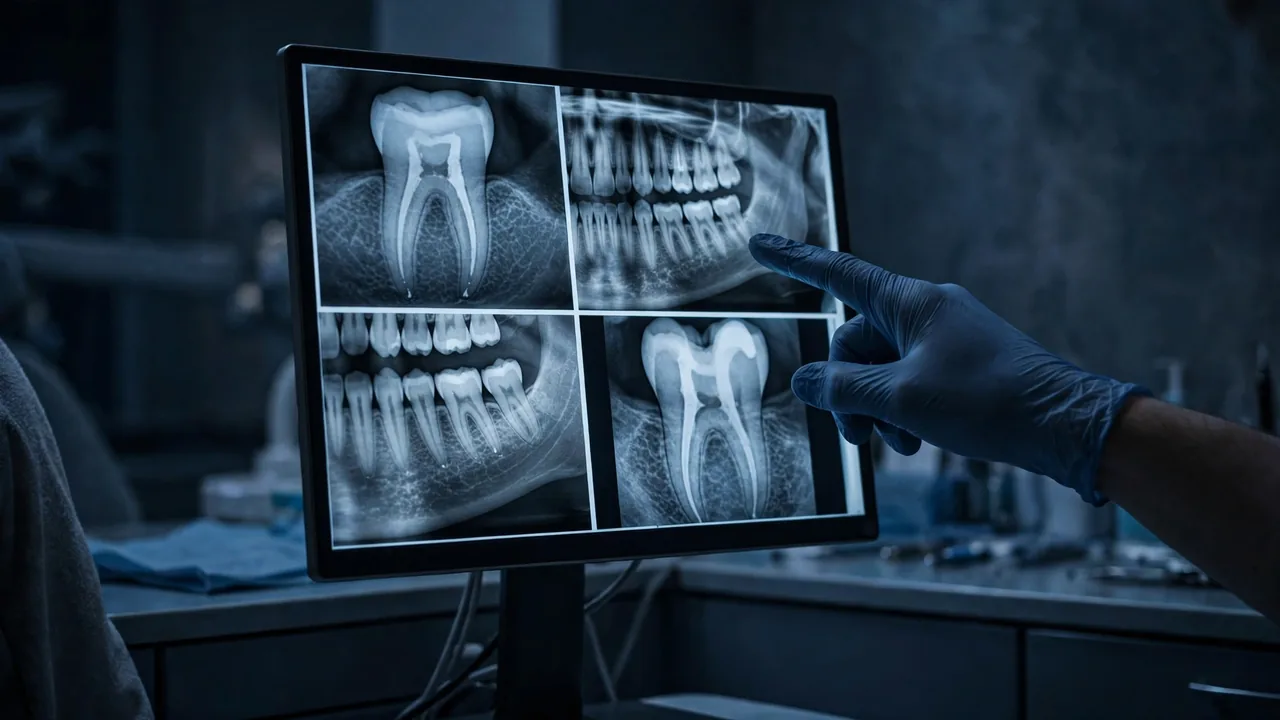
- Ask for the X-ray explanation. A good dentist will show you the dark area on the image that represents decay. Understanding the picture makes the treatment decision easy to trust.
When to Call a Professional
Book a routine appointment if your check found a possible spot but your symptoms are mild. Book within days if you have a visible hole, lingering sensitivity, pain on biting, or floss that snags. Get same-day care, or urgent care if your dentist is closed, for facial swelling, fever, pain that stops you sleeping, or trouble opening your mouth or swallowing. Those last signs suggest spreading infection, which is the one dental problem that should never wait for a convenient opening.
What to Do Next
While you wait for your appointment, keep the area clean with gentle brushing and daily flossing, cut back on sugary snacks and drinks that feed the bacteria involved, and use a fluoride toothpaste. If the tooth aches, over-the-counter pain relief used as directed is fine for the short term. Then keep the appointment even if the pain fades; fading pain is the oldest trick a cavity plays.
FAQs
Can you feel a cavity with your tongue?
Often, yes, once it is moderately developed. A cavity can feel like a rough patch, a sharp edge, or a small pit in a tooth that used to feel smooth. Early decay under the surface cannot be felt, which is why a clean tongue test does not rule a cavity out.
What does a cavity look like?
It may show as a white chalky patch in its earliest visible stage, then as brown or black spots, and eventually as an obvious hole or a broken, crumbling edge. Stains from coffee or tea can imitate the color, so appearance alone is suggestive, not conclusive.
Does a cavity always hurt?
No. Many cavities cause no pain at all until decay approaches the nerve. This is the main reason routine checkups with X-rays matter: they find silent decay while a small filling still fixes it.
Can a cavity heal on its own?
A formed hole cannot heal. Very early demineralization, before a hole forms, can sometimes harden again with fluoride and better habits, which dentists call remineralization. Once the surface has cavitated, only dental treatment repairs it.
Why does my tooth hurt with sweet food but not cold?
Sweet sensitivity is a classic early cavity sign. Sugary fluid seeps into the porous decayed area and stimulates the inner tooth. A tooth that reacts to sweets in one spot deserves an exam even if cold drinks feel fine.
How do dentists check for cavities?
They combine a visual exam, gentle probing of suspicious areas, and X-rays that reveal decay between teeth and under fillings. The X-ray is the decisive tool, because the most common hiding places for decay are the ones no mirror can see.
My tooth pain stopped. Do I still need a dentist?
Yes. Pain stopping on its own can mean the nerve inside the tooth has died while infection persists in the bone. A dentist can test the tooth and treat it before it becomes an abscess.
Final Thoughts
Knowing if you have a cavity comes down to pattern recognition: one tooth, a repeatable trigger, and something your eyes, tongue, or floss can confirm. A careful 10-minute home check tells you how urgently to act, and a dental X-ray gives the final word. The expensive mistake is never the checkup; it is the months of hoping. If your check raised a flag, make the call while the fix is still small.