Introduction

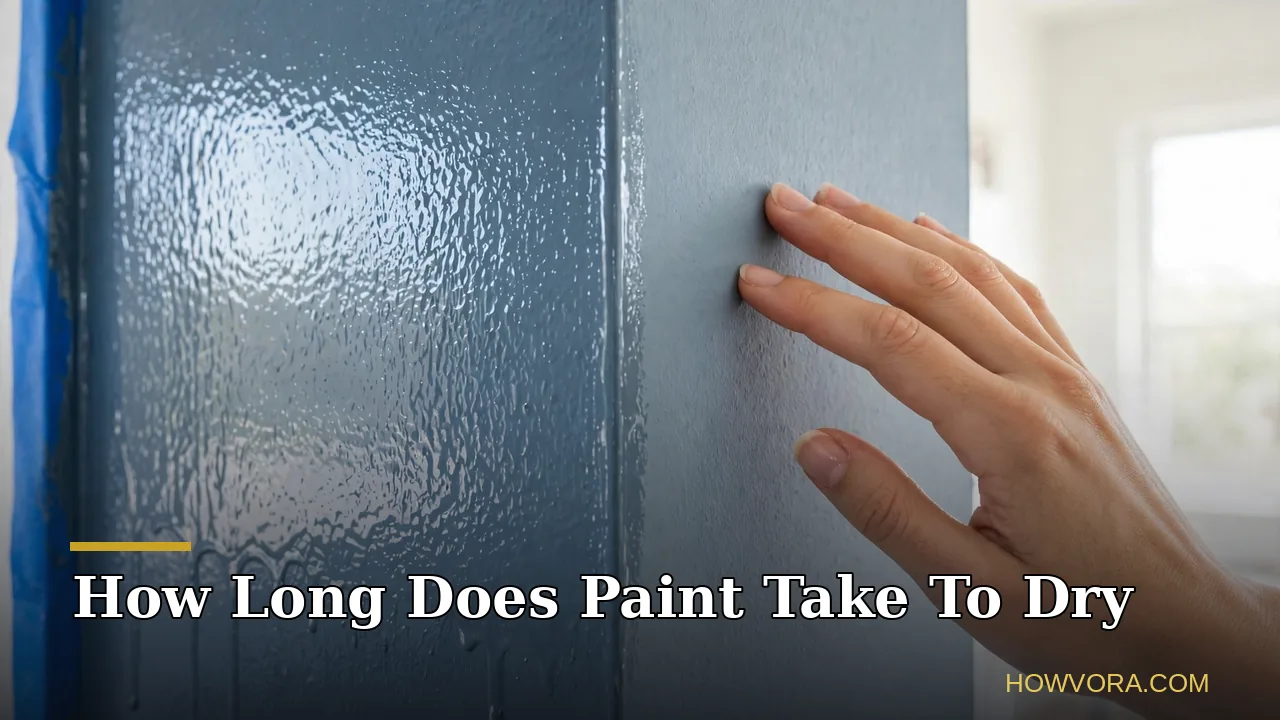
Brush the last stroke, step back, and the question arrives at once: how long does paint take to dry? The honest answer has three parts, because paint dries in stages. It feels dry to the touch long before you can safely recoat it, and it reaches full hardness, called curing, days or weeks after that. Mixing up those three stages is how fingerprints end up in doors and second coats peel away in sheets.
This guide gives the drying, recoating, and curing times for the paints people actually use: latex, oil-based, spray paint, chalk paint, and acrylic craft paint. It also explains what speeds drying up or slows it down, room temperature, humidity, coat thickness, and ventilation, so you can plan a project around real numbers instead of hopeful guessing. Timings here follow the ranges manufacturers print on their labels, which always win if your can says something different.
Featured Snippet Answer
Most latex paint feels dry to the touch in about 1 hour, can be recoated after 4 hours, and fully cures in 2 to 4 weeks. Oil-based paint needs 6 to 8 hours to dry to the touch, 24 hours before recoating, and about 7 days to cure. Cool temperatures, high humidity, and thick coats stretch every one of these times.
Before You Begin
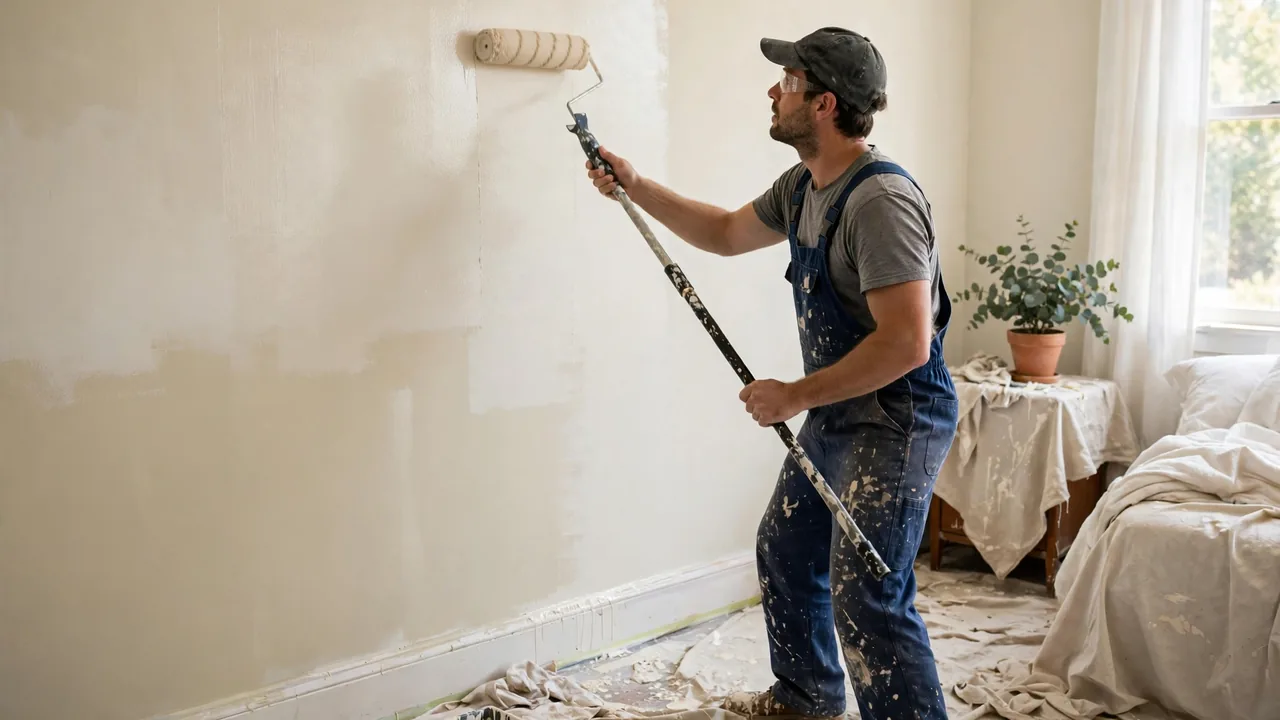
The single most useful habit in painting is reading the three numbers on your own can. Manufacturers formulate each product differently, and the label lists dry to touch, recoat, and cure times tested for that exact paint. Use the table in this guide to plan, then confirm with the label before you start the clock.
Also understand the three stages, because every mistake in this topic comes from confusing them. Dry to touch means the surface no longer feels tacky, and dust will not stick to it. Recoat time means a new coat can go on without softening or wrinkling the one below. Cure time means the film has reached full hardness and can be washed, scrubbed, and bumped by furniture without damage. A wall can pass stage one in an hour and still be three weeks from stage three.
Finally, check your conditions. Paint dries best between about 50 and 85 degrees Fahrenheit with moderate humidity and moving air. A cold basement in January and a steamy bathroom in August both slow the process, no matter what the label promises.
At a Glance

| Detail | What to know |
|---|---|
| Difficulty | Easy, mostly patience and planning |
| Time needed | 1 hour to touch for latex; up to 4 weeks for a full cure |
| Cost | Free; a fan and a thermometer help you control conditions |
| Skill level | Beginner |
| Best for | Planning recoats, furniture moves, and cleaning after any paint project |
Drying Times by Paint Type
| Paint type | Dry to touch | Recoat after | Fully cured |
|---|---|---|---|
| Latex (water-based) wall paint | About 1 hour | About 4 hours | 2 to 4 weeks |
| Oil-based paint | 6 to 8 hours | 24 hours | About 7 days |
| Spray paint | 10 to 30 minutes | Within 1 hour or after 24 to 48 hours, per label | About 7 days |
| Chalk paint | About 30 minutes | About 2 hours | Up to 30 days (wax extends this) |
| Acrylic craft paint | 10 to 20 minutes | About 1 hour | About 24 hours to a few days |
| Primer (latex) | About 30 minutes | About 1 to 3 hours | Not usually left as a finish |
Treat these figures as ranges for normal room conditions, not guarantees. A thin coat of latex on a warm, dry day can be ready to recoat at the early end. The same paint in a cold, damp room can need twice as long. When a label and a general table disagree, the label is right for the product in your hand.
Things You’ll Need
| Item | Purpose |
|---|---|
| The paint can label | Your exact dry, recoat, and cure times for that product |
| A timer or phone clock | Tracks each stage from the moment the coat went on |
| Room thermometer | Confirms you are inside the paint’s working temperature range |
| Hygrometer (optional) | Shows humidity, the most common hidden cause of slow drying |
| Box fan or oscillating fan | Moves air across the surface and speeds even drying |
| Painter’s tape and a marker | Notes the time each coat was finished, right on the wall edge |
Step-by-Step Guide
Use this sequence to judge any coat of paint, on any project.
- Step 1: Note the time the coat was finished. Write it on the painter’s tape at the edge of the job. Memory is unreliable by the second wall, and every later decision depends on when the clock started.
- Step 2: Test dry to touch the right way. After the label’s touch-dry time, press a fingertip lightly on an inconspicuous spot for a second. Dry paint feels smooth and leaves nothing on your skin. If your finger sticks slightly or leaves a print, the coat needs more time. Knuckle tests on hidden edges beat palm tests on the middle of a door.
- Step 3: Wait the full recoat time before the next coat. Recoating early traps solvent and water under a skinned surface. The result is wrinkling, bubbling, or a soft coat that peels when tape comes off. Latex typically needs about 4 hours; oil-based needs a full 24. If the room is cool or damp, add time rather than subtracting it.
- Step 4: Respect the spray paint window. Many spray paints follow a strict rule printed on the can: recoat within about an hour, or wait 24 to 48 hours. Spraying in the gap between those windows can wrinkle the finish badly. Read the can before the first coat, not after the third.
- Step 5: Handle the piece gently until it cures. A cured surface is the real finish line. Until then, do not scrub painted walls, do not set heavy objects on painted shelves, and do not close a freshly painted door tight against its frame for long periods, since paint can stick to weatherstripping and peel away in strips.
- Step 6: Adjust for conditions before blaming the paint. If a coat is still tacky past its window, check the room. Below about 50 degrees Fahrenheit, latex paint struggles to form a proper film at all. Humidity above roughly 70 percent slows evaporation sharply. Warm the room gently, run a fan, and wait rather than recoating over a soft base.
- Step 7: Plan the project backwards from the cure. Painting a guest room the day before guests arrive works for touch dryness but not for leaning luggage against the wall. For bookshelves, cabinets, and doors, schedule the painting so the cure finishes before real use begins, even if that means painting a week earlier than feels necessary.
How to Know You Did It Correctly
A coat that dried correctly feels uniformly smooth and matte or evenly glossy, with no tacky patches when you press different spots. The color looks consistent in daylight, with no darker wet-looking areas. Paint that was recoated on schedule resists a firm fingernail press at an edge without denting once cured, and tape pulled from it comes away clean. If the surface stays soft or sticky days later in normal conditions, something in the process, usually conditions or coat thickness, went wrong.
Expected Timeline and Results
For a standard bedroom repaint with latex paint, expect this rhythm: first coat on in the morning, recoat after about 4 hours, touch-ups the same evening, light use of the room the next day, and full cure in 2 to 4 weeks. An oil-based enamel on trim stretches the same job across two days minimum, with a week before the surface is truly hard. Cabinets and furniture deserve the most patience of all: most failed cabinet paint jobs are simply pieces put back into service during the soft cure window.
Alternative Methods
Speeding drying safely. You can help paint dry faster without ruining it: raise the room temperature into the 70s, run a fan so air moves across the surface, use a dehumidifier in a damp room, and apply thinner coats. What you cannot do is force it with a heat gun or hair dryer aimed at one spot, which skins the surface, traps moisture below, and can blister the film.
Choosing faster products. If a tight schedule matters, pick paints sold for the job: quick-dry primers, fast-recoat latex lines, and spray paints built for same-day handling. Their labels carry shorter times because the chemistry is different, not because the marketing is bolder.
Common Mistakes to Avoid
- Recoating because the paint feels dry. Touch dry and recoat-ready are different stages hours apart. Feel is the test for stage one only.
- Applying thick coats to finish sooner. One heavy coat dries slower and less evenly than two thin ones, and it sags and wrinkles. Thin coats win on time and finish.
- Painting in a cold or steamy room. Cold paint cannot form a proper film; humid air blocks evaporation. Check conditions before the first wall, not after the last.
- Closing doors and windows against fresh paint. Painted doors stuck to frames and windows painted shut are cure-stage mistakes. Leave gaps or remove weatherstripping contact until cured.
- Washing walls too soon. Scrubbing a two-day-old latex wall can lift the finish. Wait out the cure, then clean gently.
- Skipping the label. Specialty paints vary widely. The can in your hand is the only authority that matters.
Troubleshooting & Common Problems
| Problem | Cause | Solution |
|---|---|---|
| Paint still tacky after 24 hours | High humidity, low temperature, or a very thick coat | Warm the room, add airflow, and wait. Most tackiness resolves in a few extra days of good conditions |
| Second coat wrinkled the first | Recoated before the first coat was ready | Let it dry fully, sand the wrinkles smooth, and recoat within the proper window |
| Paint peels off in sheets | Coat applied over a soft or glossy unprepared surface | Remove loose paint, sand, prime, and repaint with correct recoat timing |
| Door sticks to the frame after painting | Door closed before the paint cured | Free it gently, sand the damaged edge, touch up, and leave the door ajar until cured |
| Finish looks blotchy as it dries | Uneven coat thickness drying at different rates | Wait for a full cure before judging; most blotchiness evens out. Apply one more thin coat if it remains |
Expert Tips
- Write coat times on the tape, every coat. A strip of painter’s tape with ‘coat 1, 10:15’ removes all guesswork about recoat windows.
- Test cure on a hidden edge with a fingernail. If a thumbnail press leaves a dent, the paint is not cured, whatever the calendar says.
- Paint earlier in the day. Morning coats get a full day of warm, dry air. Evening coats sit in cooling, more humid night air and lag behind.
- Keep the room conditions steady for the first 24 hours. Big temperature swings and steamy showers next door are the quiet cause of many soft finishes.
When to Call a Professional
Drying questions rarely need a professional, but the results of bad drying sometimes do. If large areas of paint stay rubbery for a week in good conditions, the product itself may have been faulty, frozen in storage, or applied over an incompatible coating, and a painter can diagnose which. Peeling across a whole room, especially in bathrooms, can point to moisture moving through the wall, which is a building problem rather than a paint problem. Solve the moisture first; paint second.
What to Do Next
Once your paint is cured, finish the job properly: store the labeled leftover can indoors for touch-ups, and note the cure date if the surface will be washed or loaded soon. If you are mid-project and waiting on a recoat window, use the pause to prep the next surface, wash brushes, and set up ventilation. Good painters treat drying time as scheduled work time, not dead time.
FAQs
How long does latex paint take to dry?
Latex paint is usually dry to the touch in about 1 hour, ready for a second coat after about 4 hours, and fully cured in 2 to 4 weeks. Cool or humid rooms stretch all three times, so add margin instead of rushing the recoat.
Can you recoat paint after 2 hours?
For most latex wall paints, 2 hours is too soon; the standard recoat time is about 4 hours. Some fast-dry products allow 1 to 2 hours and say so on the label. Recoating early risks wrinkling and peeling, so follow the can.
What is the difference between drying and curing?
Drying means the surface feels dry and no longer tacky. Curing means the paint film has reached full hardness and chemical stability. Paint can feel dry in an hour yet need weeks to cure before it can be scrubbed or take hard knocks.
Does paint dry faster with a fan?
Yes. Moving air carries moisture away from the surface and evens out drying. Aim a fan across the painted surface, not directly at one spot from close range, and combine it with comfortable room temperature for the best effect.
Why is my paint still sticky after a week?
The usual causes are high humidity, low temperature, very thick coats, or paint applied over a glossy surface without primer. Improve warmth and airflow and give it more time. If it stays soft, the coat may need to come off and be redone under better conditions.
How long should paint dry before putting furniture back?
Light furniture can usually return after 24 to 48 hours on latex-painted walls. For painted floors, shelves, and cabinets, wait as close to the full cure as you can, ideally a week or more, and use felt pads to protect the still-hardening surface.
Does oil paint take longer to dry than latex?
Yes, at every stage. Oil-based paint needs 6 to 8 hours to dry to the touch, about 24 hours before recoating, and roughly 7 days to cure, while latex is touch-dry in about an hour. Oil paint rewards the wait with a harder, smoother finish.
Final Thoughts
Paint runs on three clocks: about an hour to feel dry, hours more before a recoat, and weeks before it is fully hard. Plan around the slowest clock that matters for how the surface will be used, control temperature and airflow, and let the label settle arguments. Patience is not a delay in painting; it is half the craft.