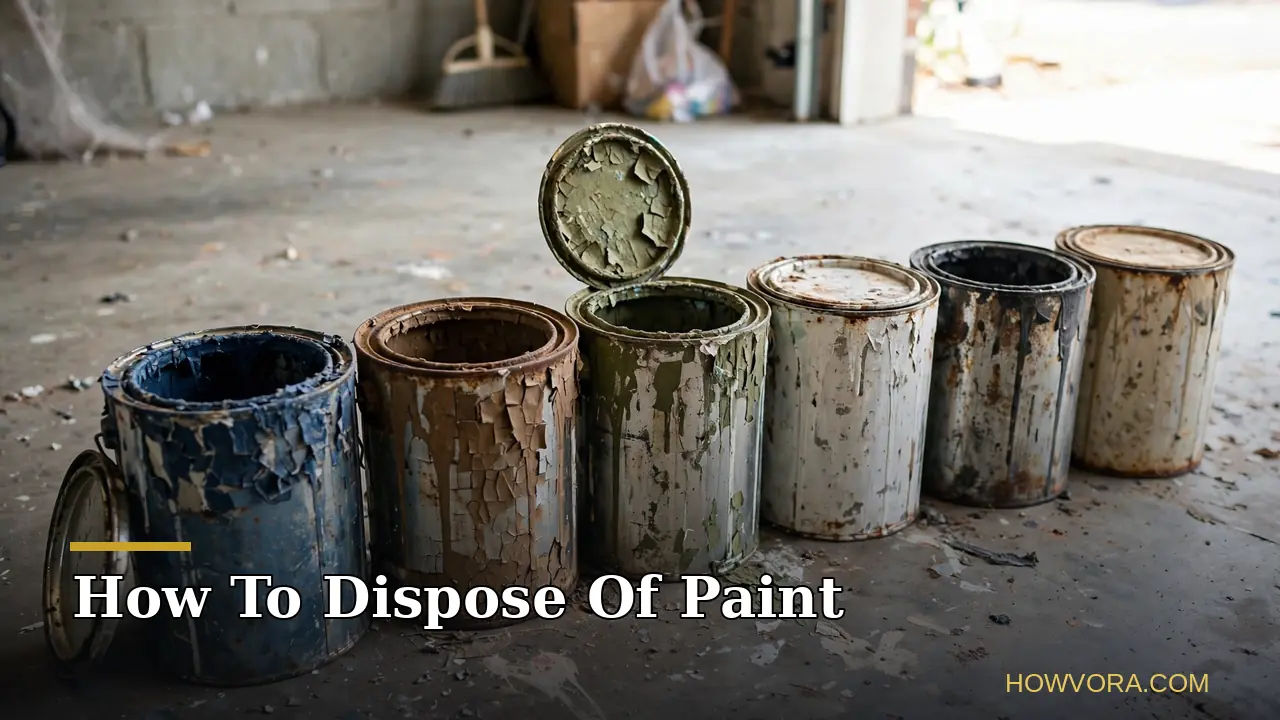
Introduction

Every finished paint job leaves the same problem behind: a row of half-used cans in the garage. You cannot simply toss them in the trash, and pouring paint down a drain or onto the ground is illegal in most places and genuinely harmful. This guide explains how to dispose of paint correctly, based on the one distinction that decides everything: if the paint is water-based latex or oil-based.
The good news is that most leftover paint has a better fate than the landfill. Small amounts of latex paint can often be dried out and thrown away with household trash. Usable paint can go to a neighbor, a school, or a community reuse program. Only oil-based paint and paint soaked materials almost always need a household hazardous waste facility.
Featured Snippet Answer
To dispose of paint, first identify the type. Latex paint can usually be dried out with the lid off or mixed with cat litter, then thrown in household trash once fully solid, if local rules allow. Oil-based paint is household hazardous waste and must go to a collection facility. Never pour any paint down a drain.
Before You Begin

Start by gathering every can in one place and reading the labels. The label tells you the type, and the cleanup line is the fastest clue: if it says clean up with soap and water, the paint is latex or another water-based product. If it says clean up with mineral spirits or paint thinner, the paint is oil-based. Treat any unlabeled or very old can as oil-based until you can confirm otherwise.
Sort the cans into three piles: paint still usable, paint that is spoiled or nearly empty, and oil-based paint of any condition. Usable paint has a smooth, creamy texture and mixes back together with stirring. Spoiled latex paint smells sour, stays lumpy after stirring, or has a skin that broke into pieces. This sorting takes ten minutes and decides which disposal route each can follows.
Finally, check your local rules before you dry anything out. Most US cities and counties follow the same broad pattern, dried latex in the trash, oil-based to hazardous waste, but the details vary. Some areas ban paint in landfills completely and route everything through collection programs. Your city or county waste website, or its public works phone line, gives the exact rule in one search.
At a Glance

| Detail | What to know |
|---|---|
| Difficulty | Easy |
| Time needed | 30 minutes to sort and prepare, plus drying time of 1 to several days for latex |
| Cost | Free for dried latex in trash and most hazardous waste drop-offs; paint hardener costs a few dollars per can |
| Skill level | Beginner |
| Best for | Leftover latex and oil-based paint from home projects |
Things You’ll Need
| Item | Purpose |
|---|---|
| Stir sticks | Mix each can to judge if the paint is still usable |
| Cat litter, sawdust, or shredded paper | Absorbs liquid latex paint so it solidifies |
| Commercial paint hardener | Turns latex paint solid in hours instead of days |
| Cardboard box lined with a trash bag | Holds cans while they dry and catches drips |
| Rubber or nitrile gloves | Protects hands during stirring and pouring |
| Plastic wrap or original lids | Seals paint you keep for touch-ups |
| Permanent marker | Labels kept cans with color, room, and date |
Safety Precautions
- Never pour paint down a sink, toilet, or storm drain. Latex paint can damage septic systems and treatment plants, and a storm drain leads straight to local waterways.
- Work outdoors or in a ventilated garage when you open old cans. Oil-based paint and spoiled paint release strong fumes.
- Keep paint and hardener away from children and pets while cans sit open to dry. Place them somewhere the can cannot be tipped over.
- Do not mix different paints together in one can for disposal unless a collection program tells you to. Mixed oil and latex waste can be rejected at drop-off.
- Transport cans upright, sealed, and in the trunk or truck bed, never loose in the passenger cabin.
Step-by-Step Guide
- Step 1: Identify each paint type. Read the cleanup instructions on every label. Soap and water cleanup means latex. Mineral spirits or thinner cleanup means oil-based. Mark each lid with an L or an O so the sorting survives the whole job.
- Step 2: Test if the paint is still good. Stir each can thoroughly. Good paint blends into one smooth, even color. If latex paint smells like sour milk, has mold on the surface, or stays gritty and separated after a full minute of stirring, it is spoiled and should be disposed of rather than donated or reused.
- Step 3: Save and store paint worth keeping. Keep small amounts of good paint for touch-ups. Pour what you keep into a clean glass jar or a small can filled close to the top, since less air in the container means slower spoiling. Seal plastic wrap over the opening, tap the lid on with a mallet, label it, and store it indoors where it cannot freeze.
- Step 4: Offer usable surplus paint to others. Full or nearly full cans in current colors often find a home fast. Ask neighbors, schools, theater groups, and Habitat for Humanity ReStores, many of which accept unopened or good-condition paint. Some paint stores and manufacturers also run take-back and recycling programs, including PaintCare drop-off sites in states that have them.
- Step 5: Dry out latex paint that cannot be reused. For a can less than a quarter full, remove the lid and let air do the work in a safe, ventilated spot; small amounts skin over and solidify in a day or two. For larger amounts, stir in cat litter, sawdust, or shredded paper a little at a time until the paint turns into a thick, oatmeal-like solid. A commercial paint hardener does the same job in a few hours.
- Step 6: Confirm the latex paint is fully solid. Press the surface with a stir stick. It should feel firm all the way through, with no liquid pooling underneath and nothing that pours. If the center is still soft, add more absorbent material and wait another day. Liquid paint in a trash bag can leak in the collection truck, which is exactly what the drying step exists to prevent.
- Step 7: Throw dried latex paint in household trash, if your area allows it. Leave the lid off the solidified can so the collection crew can see the paint is dry, and place the can in your regular trash, not the recycling bin. Paint cans do not belong in curbside recycling even when empty, because residue contaminates the load. If your area bans paint from landfills entirely, take the dried cans to a collection event instead.
- Step 8: Take oil-based paint to household hazardous waste. Keep oil-based paint, stains, and varnishes in their original labeled cans with lids sealed tight. Find your city or county household hazardous waste facility or the next scheduled collection event, check its hours and any quantity limits, and drop the cans there. This route is usually free for residents.
- Step 9: Handle empty cans and painting waste correctly. A metal can with only a thin, dry film of latex residue can usually go in the trash with the lid off. Rags and brushes soaked in oil-based paint are a fire risk while they dry, so lay them flat outdoors away from buildings until stiff, then bag them and follow local guidance. Never burn paint waste.
How to Know You Did It Correctly
You are done when every can has left the gray zone. Dried latex cans are solid to the center, sit in the trash with lids off, and show no liquid when tipped. Oil-based cans are sealed, labeled, and either delivered to a hazardous waste facility or stored safely while you wait for a collection event. Kept paint sits in small, labeled, sealed containers indoors. If a can’s contents could still pour, the job is not finished.
Expected Timeline and Results
Sorting and testing a typical garage collection takes about 30 minutes. Thin layers of latex dry in one to two days; a half can mixed with cat litter usually solidifies overnight, and a hardener can cut that to a few hours. Hazardous waste drop-off is a single trip once you know the facility’s hours. The result is a cleared shelf, no fines for illegal dumping, and no paint reaching soil or water.
Alternative Methods
Paint recycling programs. In states with PaintCare programs, you can drop off leftover paint of both types at participating paint stores year-round, often at no charge. Check the program’s site locator before you load the car.
Community collection events. Many counties run seasonal hazardous waste days that accept paint along with solvents, pesticides, and old fuel. They suit anyone with a large backlog of oil-based products.
Solidify and mail-back kits. A few services sell kits that harden paint and let you ship it for recycling. They cost more than a local drop-off but help in rural areas far from a facility.
Common Mistakes to Avoid
- Pouring paint down the drain. Even latex paint can clog plumbing, harm septic bacteria, and pollute water. There is no amount small enough to make this a good idea.
- Trashing liquid paint. Cans get crushed in collection trucks and spill. Always solidify latex first.
- Putting paint cans in curbside recycling. Residue makes the whole load suspect. Dried cans go in the trash; drop-off programs handle the rest.
- Letting good paint freeze in the garage. Frozen latex paint usually separates and never blends smoothly again. Store keepers indoors.
- Guessing at unlabeled cans. Treat mystery cans as oil-based and take them to hazardous waste. Guessing wrong in the other direction is the costly error.
- Storing open drying cans where kids or pets can reach them. Drying paint still counts as paint until it is fully solid.
Troubleshooting & Common Problems
| Problem | Cause | Solution |
|---|---|---|
| Latex paint will not dry out | Can is too deep, or the room is cold and humid | Stir in cat litter or hardener, move the can to a warm, dry, ventilated spot, and give it another day |
| Paint smells sour and looks curdled | Bacteria spoiled the paint during storage | Do not reuse or donate it. Solidify latex and trash it, or take it to a collection event |
| Hazardous waste facility will not take your paint | You live outside its service area, or it only accepts paint at events | Check your own county program and its event calendar; PaintCare sites accept paint in participating states |
| A dried can still has liquid in the middle | Absorbent material did not reach the bottom | Stir in more cat litter until the whole can is uniformly thick, then wait a full day before trashing |
| Spilled paint on the driveway | A can tipped during sorting | Contain it with cat litter, scoop the mass into a bag once absorbed, and wash the residue with water before it dries |
Expert Tips
- Buy closer to the right amount next time. Measure the room and use the coverage figure on the label, roughly one gallon per 350 to 400 square feet of wall. Most leftovers exist because a second gallon was opened on a guess.
- Keep touch-up paint in small jars, not the original gallon. A jam jar of each color takes a shelf corner instead of a floor, and the paint inside keeps longer with less air above it.
- Write the room and date on every lid the day you paint. Two years later, that note is the difference between a five-minute touch-up and a new color-matching trip.
- Consolidate partial cans of the same paint. Pouring two half cans of identical latex paint into one reduces air exposure and halves your storage and disposal load.
When to Call a Professional
Most leftover paint is a DIY disposal job, but a few situations call for help. Large quantities from a whole-house repaint or a contractor’s leftover stock may exceed household program limits and need a licensed waste hauler. Paint in a home built before 1978 may be lead-based if it came off old walls or trim as chips and dust; that debris needs lead-safe handling, and your local health department can advise. If you find rusted, bulging, or leaking cans of unknown chemicals, do not open them. Call your hazardous waste program and describe what you have.
What to Do Next
Finish the job by wiping down the storage shelf, moving your labeled keeper jars indoors, and putting your county’s hazardous waste schedule on the calendar if you still hold oil-based cans. Next time you buy paint, ask the store if it accepts returns of unopened cans and if it is a drop-off site for leftovers.
FAQs
Can you throw paint in the regular trash?
Yes, but only latex paint that has been completely dried out, and only in areas that allow it. The paint must be solid through the whole can, and leaving the lid off shows the crew it is dry. Oil-based paint never goes in household trash.
How do you dry out latex paint fast?
Stir in cat litter, sawdust, or shredded paper until the paint thickens like oatmeal, or use a commercial paint hardener, which solidifies a can in a few hours. A shallow layer in a wide tray also dries far faster than a deep can.
Is dried paint hazardous waste?
Dried latex paint is generally not treated as hazardous once fully solid. Oil-based paint stays hazardous because of its solvents, even if it feels tacky or thick. Keep oil-based products in the hazardous waste stream no matter their condition.
Can you pour latex paint down the drain if you add water?
No. Diluting paint does not make it drain-safe. It can coat pipes, upset septic systems, and pass solvents and pigments into water treatment or waterways. Solidify leftover latex and trash it instead.
What do you do with empty paint cans?
If a metal can holds only a thin film of fully dry latex residue, most areas accept it in household trash with the lid off. Cans that held oil-based paint, or any can with liquid residue, go to hazardous waste.
How long can you store leftover paint?
Unopened latex paint keeps for years in a cool indoor spot, and opened paint often lasts one to two years if sealed well and never frozen. Stir and test before reuse. Sour smell, mold, or permanent lumps mean it is time to dispose of it.
Where can you recycle paint?
PaintCare drop-off sites at paint stores accept leftover paint for recycling in participating states, and many counties run collection events. ReStores and community groups may also take good, usable paint for reuse.
Final Thoughts
Disposing of paint comes down to one question: what type is it? Latex gets reused, dried, and trashed as a solid. Oil-based goes to hazardous waste, sealed and labeled. Neither goes down a drain. Sort your cans once, follow the route each type needs, and the garage shelf stays clear for good.